
Minister Zhimomi calls for stronger unity at Moatsü festival
Morung Express News
Chümoukedima | May 3
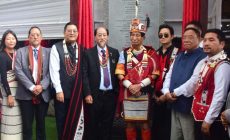
Nagaland Minister for PHED Jacob Zhimomi on Saturday stressed the urgent need for unity among Naga tribes, calling for a collective effort to build a common Naga identity beyond clan and tribal lines.
Addressing a gathering as the chief guest during the Moatsü festival at Sammogooting Ground in Chümoukedima, Zhimomi said that while Nagas have made significant progress over the years, “there is still a deficiency in unity,” which must be addressed for the community to grow and prosper.
.webp)
He urged people to move beyond narrow tribal mindsets and work together as one society, stating that unity should extend beyond families and clans. “We have to love one another as Nagas and learn to live with each other’s shortcomings. That is the development we require in our minds,” he said.
Highlighting the importance of identity, the minister noted that Nagaland, since attaining statehood in 1963, has been blessed with diverse cultures and tribes, now numbering 16 following recent recognitions. He said the state’s rich traditions and festivals, including the globally recognised Hornbill Festival, reflect a shared heritage that should bind the people together.
.webp)
Zhimomi pointed out that while unity is often visible among Nagas outside the state, it weakens within. “The same sense of affection we display outside must be replicated within the state,” he said.
Calling for introspection, he said development should not be limited to infrastructure such as roads, buildings, and airports, but must also include social behaviour, character, and cultural values.
“What matters most is the character of human beings who will utilise these facilities,” he said, adding that the present generation expects collective responsibility from leaders, parents, and institutions.
He also emphasised the need to work beyond political differences on issues affecting all Nagas, stating that unity and cooperation must transcend politics.
The minister cautioned against district- or tribe-centric development, warning that such approaches could hinder overall progress. “If each district or tribe tries to assert supremacy, the Naga people will not grow as desired,” he said.
.webp)
Referring to economic realities, Zhimomi said Nagaland remains heavily dependent on central assistance for salaries, pensions, and development activities. He noted that Nagas are exempted from income tax under provisions of the Income Tax Act, limiting the state’s ability to generate internal revenue.
“We are a dependent state and must learn to live responsibly, improve our social behaviour, and change our way of thinking,” he said, adding that becoming a more disciplined and civilised society is crucial for gaining wider recognition.
He further encouraged people to take pride in their identity and work towards a unified voice. “We must be able to stand anywhere and say we are proud Nagas without having to explain our divisions,” he remarked.
Zhimomi concluded by urging the people to uphold the values of unity, humility, and mutual respect, stressing that true progress lies in becoming better human beings and leaving behind a strong legacy for future generations.
Nagaland Rural Development and SIRD Minister Metsubo Jamir, in his address as the guest of honour, called for greater unity among the Ao community and stressed the need to preserve cultural identity and language.
.webp)
Jamir extended greetings on the occasion and expressed hope that the sowing festival would sow seeds of friendship among Aos, neighbouring Naga villages, and all tribes, leading to greater unity, blessings, and a shared future.
Stating that Aos are often regarded as a pillar for other communities, he said people look up to them as a society living in unity and peace, even though the reality may differ. He urged the community to be more united, understand one another, and live harmoniously, as their way of life reflects on the entire community.
Referring to cultural presentations and traditional games, the minister cautioned against treating them as mere displays, warning that Ao cultural practices and language are gradually disappearing. He said excessive focus on learning other languages could lead to the loss of identity, and stressed the need to preserve the Ao language and traditions.
.webp)
Also speaking at the programme, Moatsü host MLA Nuklutoshi extended greetings and underscored the importance of imparting Ao cultural and traditional values to the younger generation.
He noted that in the newly created Chümoukedima district, Ao leaders and community members were celebrating the festival together, and emphasised that such celebrations should be observed with sincerity, in the name of God, and in true unity rather than merely in form.
Urging Aos in Chümoukedima to set an example, he called for unity and collective responsibility, while also advocating resilience and cooperation despite the district demarcation of Dimapur and Chümoukedima.
The programme was organised by the Ao Senso Telungjem Chümoukedima in collaboration with North East Zone Cultural Centre (NEZCC), under the theme “Nechi Ranglok.”
The celebration commenced with an invocation by Dr Imtisangba, Pastor of CABA, followed by a welcome address by Dr Moa Walling, President of ASTC. Greetings were then conveyed by Razüovotuo Chatsu, Chairman of CVC, and Chumriba Sangtam, President of ENPUC, setting the tone for an afternoon of cultural pride and communal joy.
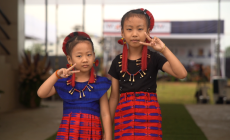
Cultural presentations highlighted the richness of Ao traditions, with performances by groups representing the Ongpangkong, Jangpetkong and Langpangkong ranges. Indigenous games organised by the Ao Youth Organisation Chümoukedima—including fire-making, traditional cart racing and bamboo climbing—captivated the audience, reflecting resilience, creativity and festive spirit.
Observed in early May, the Moatsü festival is the spring thanksgiving of the Ao Naga tribe. It marks the completion of seed sowing and embodies prayers for fertility, prosperity and peace. Traditionally, it is regarded as a sacred pause—a time to express gratitude for agricultural labour, strengthen community bonds, and reaffirm cultural traditions.



 What Does Your Face Say About Your Health?
 An orbiting message of peace
 The Top Viral YouTube Videos of 2017
 Meet R.N. Ravi, who is mediating peace with the Nagas




Leave a Reply
Your email address will not be published. Required fields are marked (required)